Somewhere in the last two years, cortisol went from an endocrinology term nobody outside a hospital used correctly to the single most blamed molecule on the internet. Cortisol face. Cortisol belly. Supplements promising to lower it, sold next to influencers self-diagnosing adrenal fatigue from a TikTok comment section.
Cortisol is real, measurable, and more central to your daily functioning than almost anything else your body produces. But how you measure your cortisol, what matters for you to pay attention to and what your daily curve—aka your baseline— looks like is the key.
Cortisol Isn't a Stress Hormone
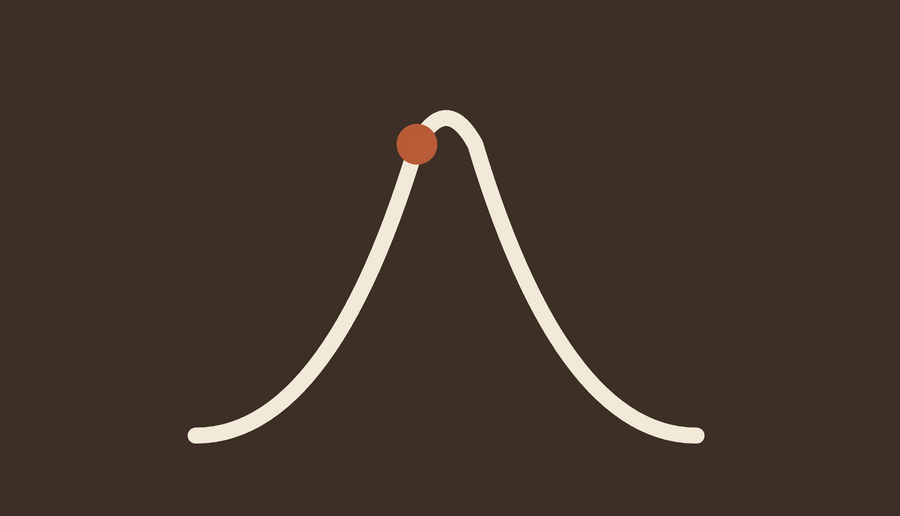
Lets start with the basics. Cortisol is not a stress hormone. Its job is to deploy energy, mainly to your brain, by controlling how much glucose your liver and muscles release. It runs on a four-phase daily rhythm: minimal during deep sleep, a preliminary rise partway through the night, a steep climb before waking, and a distinct spike in the first hour after your eyes open. High in the morning, low at night. Your alertness and your ability to function are downstream of that curve behaving the way it's supposed to. If you're feeling off, it could be your cortisol curve is out of whack.
The 30-Minute Window Everyone Missed
That final phase, the spike right after waking, is called the cortisol awakening response, or CAR: one of the most replicated findings in stress physiology, not a wellness invention. Huberman's protocol leans directly on it. Bright light in the first 30 to 60 minutes of waking can amplify that morning rise by as much as 50 percent. Delay caffeine 60 to 90 minutes so it doesn't blunt the curve. Anchor exercise to the same morning window. None of this is about suppressing cortisol. It's about getting its timing right, because the goal was never zero cortisol levels. It's a rhythm that rises and falls on schedule.
How the Rhythm Breaks, and What It Costs You
Huberman describes two burnout patterns. In one, cortisol spikes too high and fast in the morning, leaving you wired, then crashes in the afternoon. In the other, it barely rises in the morning, leaving you flat, then climbs at night exactly when it should be falling. Neither happens from one bad day. Clinicians point to accumulated strain: stress with no recovery period, inconsistent sleep, skipped meals, constant low-grade overstimulation, training without rest, and hormonal shifts that reduce buffering capacity.
A rhythm stuck in the wrong shape is linked to disrupted sleep, suppressed immune response, blood sugar dysregulation, and fat storage shifts. None of that requires a rare adrenal disease. It just requires a rhythm that's been out of shape long enough. That's exactly why the doctors quoted earlier aren't wrong to be frustrated: calling an afternoon slump "high cortisol" without measuring anything is astrology with better branding. But saying the rhythm underneath your exhaustion can't be measured at all isn't accurate either. It can. The tools just lived inside a hospital lab.
A Single Number Was Never the Fix. A Pattern Is.
One cortisol reading, taken once, tells you nothing, and the doctors are right that chasing one is mostly anxiety with extra steps. But your own wake-up reading against your own 30-minute reading against your own evening reading, tracked across a normal week and a rough one, is a different kind of information. It's not a diagnosis. It's a mirror.
That's the shift behind the at-home testing kits now bringing this out of the research lab and onto a kitchen counter, TARE's cortisol kit among them: multiple saliva readings across a real day instead of one blood draw taken on an anxious Tuesday. Cortisol was never the villain, and it was never going to save you either. It was just the most important rhythm your body runs that almost nobody could see for themselves. Now that seeing it is possible, the interesting question isn't whether cortisol matters. It's what you do once you can watch your own curve.
Sources
-
Dr. Scott Isaacs and Dr. Caroline Messer, quoted in "Behind the Cortisol Trend: Misinformation Could Drive Unnecessary Testing," Medscape
-
"TikTok scared me about my cortisol levels. Doctors say most people shouldn't panic," Yahoo Health
-
Andrew Huberman, "How to Control Your Cortisol & Overcome Burnout," Huberman Lab, summarized in Eli Health
-
"The Cortisol Awakening Response: an overview," ScienceDirect