A few years ago, cortisol was a word most people only half remembered from a biology class. Now it shows up in skincare captions, grocery store fiber aisles, and TikTok slideshows diagnosing strangers by their face shape. Somewhere in between, the actual hormone got a little lost. Here's the plain version of what cortisol is, why it matters, and why so many people suddenly want to measure their own.
What Cortisol Actually Is
Cortisol is made by your adrenal glands, two small organs that sit on top of your kidneys, and it's controlled by a signaling loop called the HPA axis: hypothalamus, pituitary, and adrenal glands, three parts of your body talking to each other in real time. Most people learn cortisol as "the stress hormone," but that's an oversimplification. Its actual job is to manage energy. It tells your liver and muscles when to release glucose into your bloodstream, which is what gives you the alertness and focus to get through your day. Stress triggers it because stress is, biologically, a demand for energy. Cortisol is the response to that demand, not the problem itself.
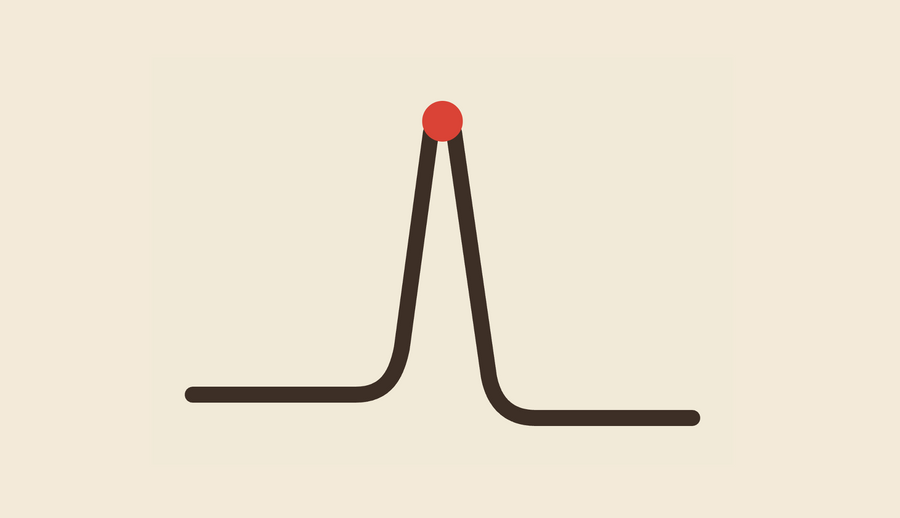
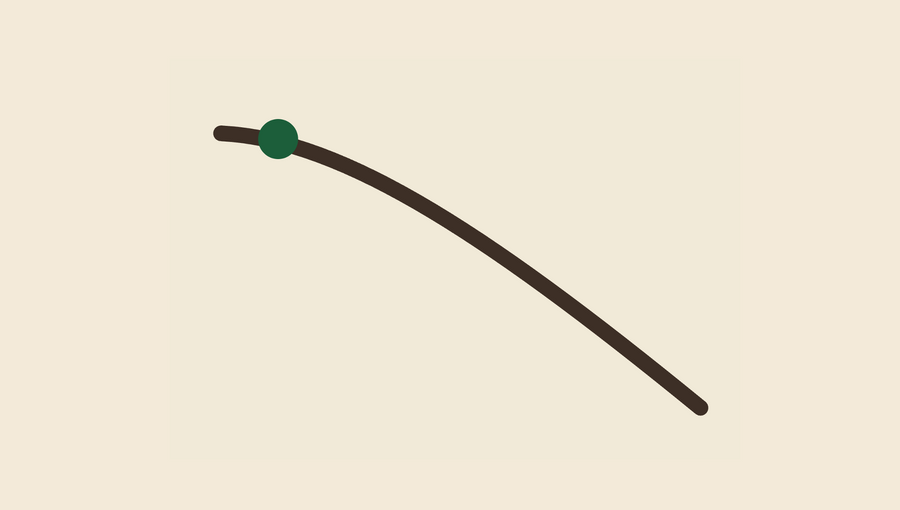
Cortisol also runs on a daily rhythm, not a flat baseline. It's supposed to be lowest during deep sleep, rise steadily through the second half of the night, spike within the first hour after you wake up, and then decline gradually across the day until it's low again by bedtime. That morning spike has a name, the cortisol awakening response, and it's one of the most studied, most replicated measurements in stress physiology. The simplest way to think about the whole system: cortisol should be high in the morning and low at night. When that shape holds, you feel it as normal energy and normal sleep. When it doesn't, you feel it too.
Why Awareness Exploded
A few things converged at once. On TikTok, the hashtag #cortisoldetox has been viewed nearly 800 million times, and #HowToReduceCortisol and #CortisolLevels together have crossed 140 million views. Some of that momentum has a specific origin point: actress Amy Schumer's public disclosure of a real cortisol-related diagnosis, exogenous Cushing syndrome caused by steroid medication, put an unusually visible, high-profile face on a hormone most people had never thought about.
At the same time, burnout became a mainstream vocabulary word rather than a niche complaint, and people went looking for a biological explanation for why they felt tired, wired, and never quite rested. Wearables and at-home testing had already trained a generation to expect that their own body's data, sleep stages, heart rate variability, glucose, should be visible to them directly instead of locked inside a doctor's chart. Cortisol was a natural next target: a hormone tied to sleep, stress, energy, and weight, and, until recently, something almost nobody outside a lab could actually check.
Separating the Real Science from the Noise
The trend outran the science fast, and doctors have been pushing back for good reason. Real Cushing syndrome, the condition most "cortisol face" content is gesturing at, is rare and involves a specific, progressive set of symptoms: central weight gain, muscle weakness, easy bruising, high blood pressure, and more, not facial puffiness on its own. Ordinary daily stress does not raise cortisol high enough to cause that kind of change. Most of what gets blamed on cortisol online is more plausibly explained by sleep quality, diet, sodium intake, or normal variation. Medical guidance is consistent on this point: a random cortisol test taken because of anxiety, without a documented pattern of symptoms, usually just produces a normal result and no useful information.
None of that means the underlying hormone is fake or irrelevant. It means a single test, taken for the wrong reason, was never going to be useful. The rhythm itself, the daily rise and fall, the morning spike, how it responds to sleep and stress over time, is real, well documented, and worth understanding. The mistake was treating a pattern that unfolds over weeks like it could be captured in one panicked snapshot.
Why People Are Starting to Track It
That's the actual shift happening now, underneath the hashtags. Interest is moving away from "is my cortisol high" as a single yes or no question, and toward tracking the shape of the curve over time, morning versus evening, one week versus the next, because that's the version of the data that was always scientifically meaningful. It's the same logic that made sleep tracking and continuous glucose monitoring go mainstream: not a diagnosis, but a pattern you can actually see and respond to, using your own baseline instead of a population average. Cortisol testing has simply caught up to a demand that was already there.
This is the exact window Tare's Kit 01 is built around. No prescription needed, no lab, and results read in about 10 minutes. Kit 01 is $45, with free shipping on orders over $75.
Resources
-
Andrew Huberman, "How to Control Your Cortisol & Overcome Burnout," Huberman Lab (via Podcast Notes)
-
"The Cortisol Awakening Response: an overview," ScienceDirect
-
"What the cortisol awakening response (CAR) tells you," Eli Health
-
"Behind the Cortisol Trend: Misinformation Could Drive Unnecessary Testing," Medscape
-
"TikTok scared me about my cortisol levels. Doctors say most people shouldn't panic," Yahoo Health
-
"TikTok's cortisol face trend meets endocrine reality," 2 Minute Medicine
-
"Cortisol: The viral trend that's rewriting shopping lists," Bakery & Snacks